By GraphPay Research · Reviewed for accuracy May 2026
Quick Answer
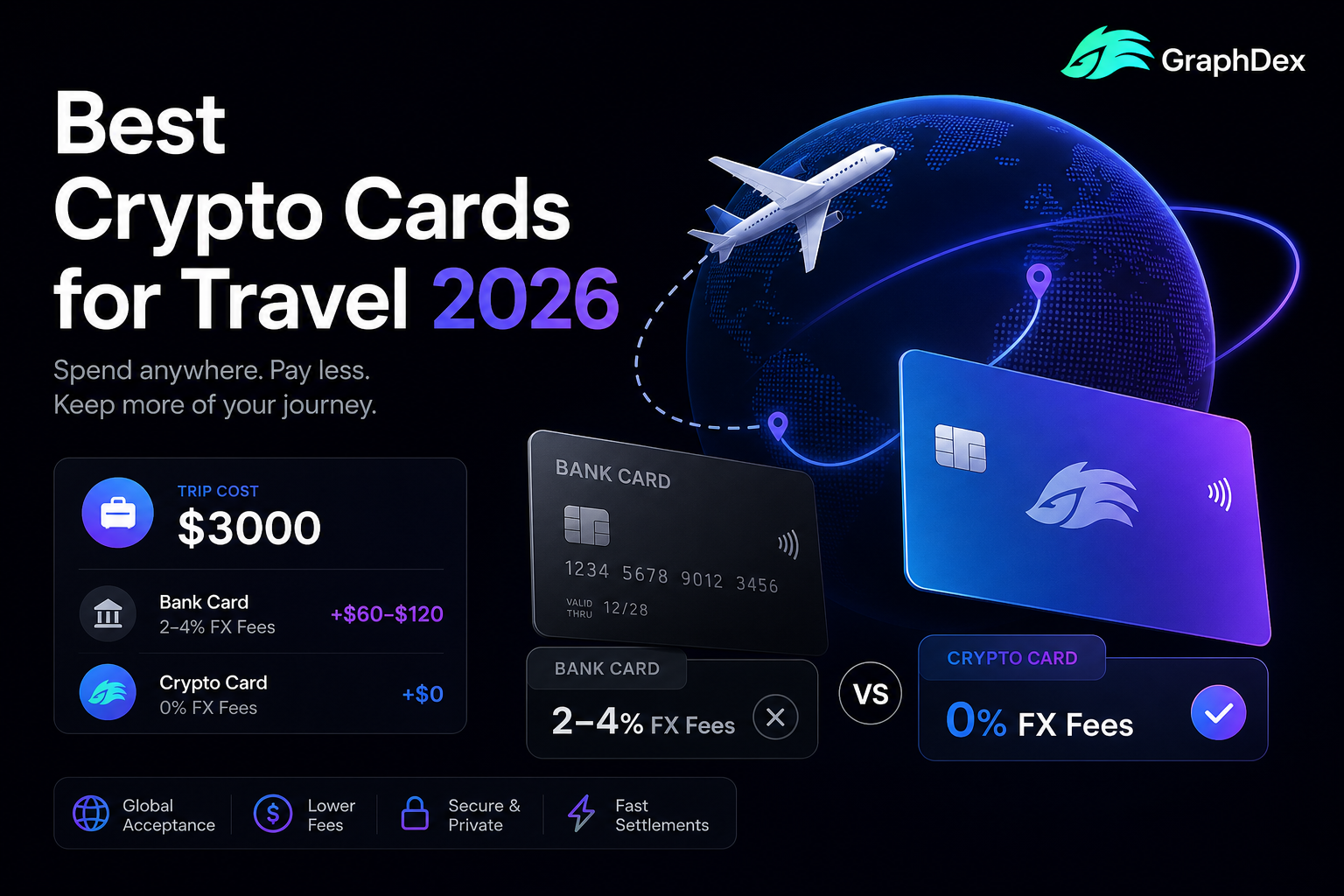
The best crypto cards for travel in 2026 combine low/zero FX fees, wide acceptance, and security:
What makes a great travel crypto card:
- Low or 0% foreign transaction fees (vs 2-4% on typical bank cards)
- Tight exchange-rate spread (the hidden cost — aim for near-market rates)
- Wide acceptance (Visa/Mastercard for global merchant coverage)
- Physical card for in-store and ATM access abroad (KYC Level 3)
- Security — non-custodial (funds in your wallet) and freeze controls
Top considerations:
- GraphPay — Non-custodial, tiered KYC, multi-chain, Visa & Mastercard; funds stay in your wallet abroad
- Other options — Various cards offer 0% FX (Bleap, Gnosis Pay) with region-specific strengths
The key insight: The advertised "0% FX" isn't the whole story — check the exchange-rate spread too. A card with "no FX fee" but a wide spread can cost more than one with a small fee and tight spread. For travel, total cost (fee + spread) is what matters.
Get a GraphPay card for travel
Key Takeaways
- Traditional bank cards charge 2-4% foreign transaction fees; crypto cards can eliminate this.
- Watch the hidden exchange-rate spread — "0% FX" with a wide spread can still cost you.
- The best travel crypto cards combine low total cost, wide acceptance, and a physical card.
- Non-custodial cards keep your funds in your wallet while you travel — added security.
Why Crypto Cards Can Be Better for Travel
Traditional bank and credit cards impose costs on international spending that crypto cards can reduce or eliminate.
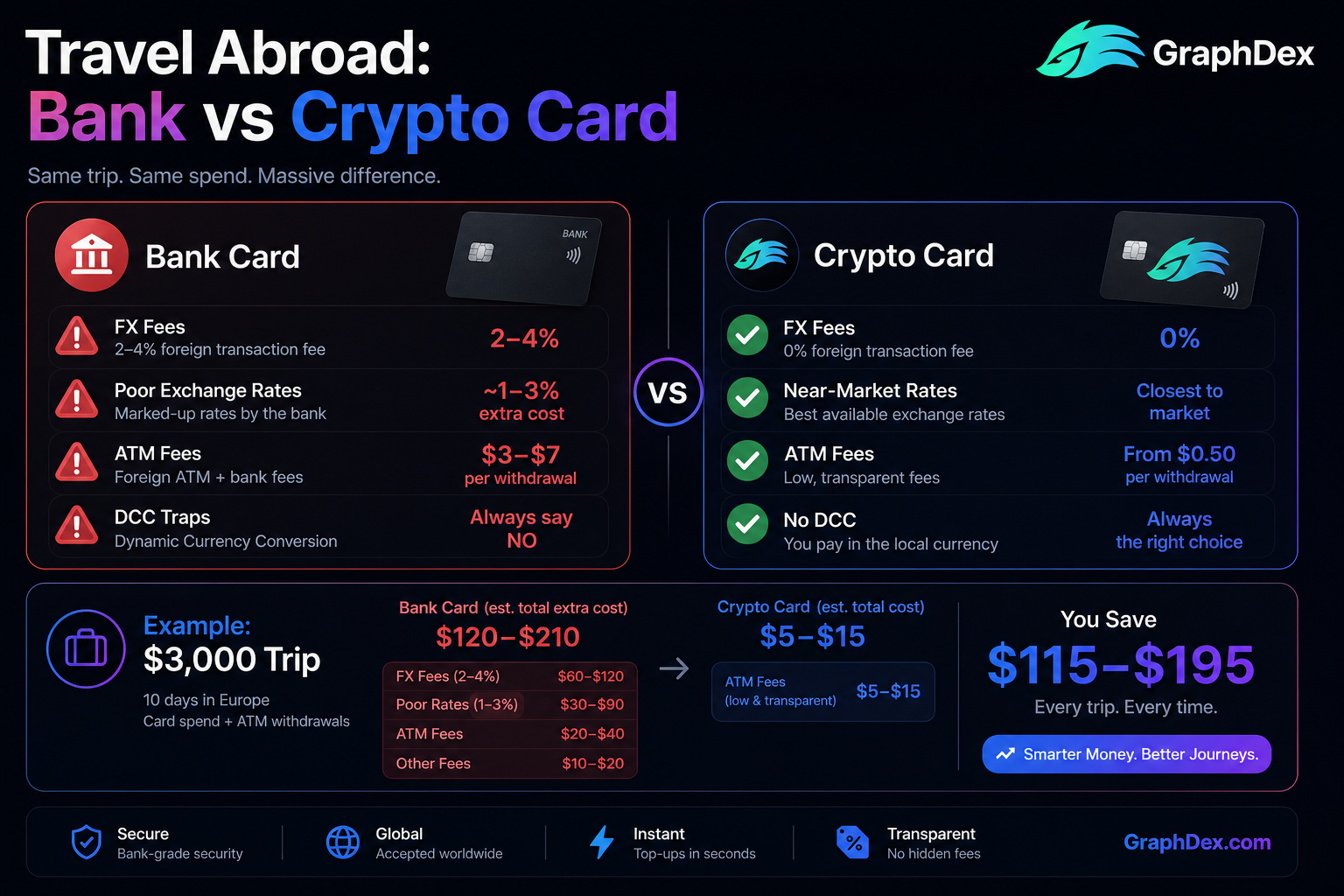
The hidden costs of traditional cards abroad:
- Foreign transaction fees: Typically 2-4% on every purchase in a foreign currency
- Poor exchange rates: Banks often apply unfavorable rates plus markups
- ATM fees abroad: High fees for cash withdrawals in other countries
- Dynamic currency conversion traps: Merchants offering to charge in your "home currency" at terrible rates
Over a trip, these add up significantly. A traveler spending $3,000 abroad could pay $60-120+ in foreign transaction fees alone — before poor exchange rates.
How crypto cards help:
- Low or 0% FX fees: Many crypto cards eliminate foreign transaction fees
- Near-market rates: The best offer tight exchange-rate spreads close to real market rates
- Global acceptance: Visa/Mastercard rails work worldwide
- Spend crypto directly: Convert crypto to local currency at the point of sale
The important caveat: Crypto cards aren't automatically cheaper. The "hidden" exchange-rate spread (when converting crypto to fiat) can offset the savings from 0% FX fees. The best travel crypto cards minimize BOTH the FX fee AND the spread. Always evaluate total cost, not just the advertised fee.
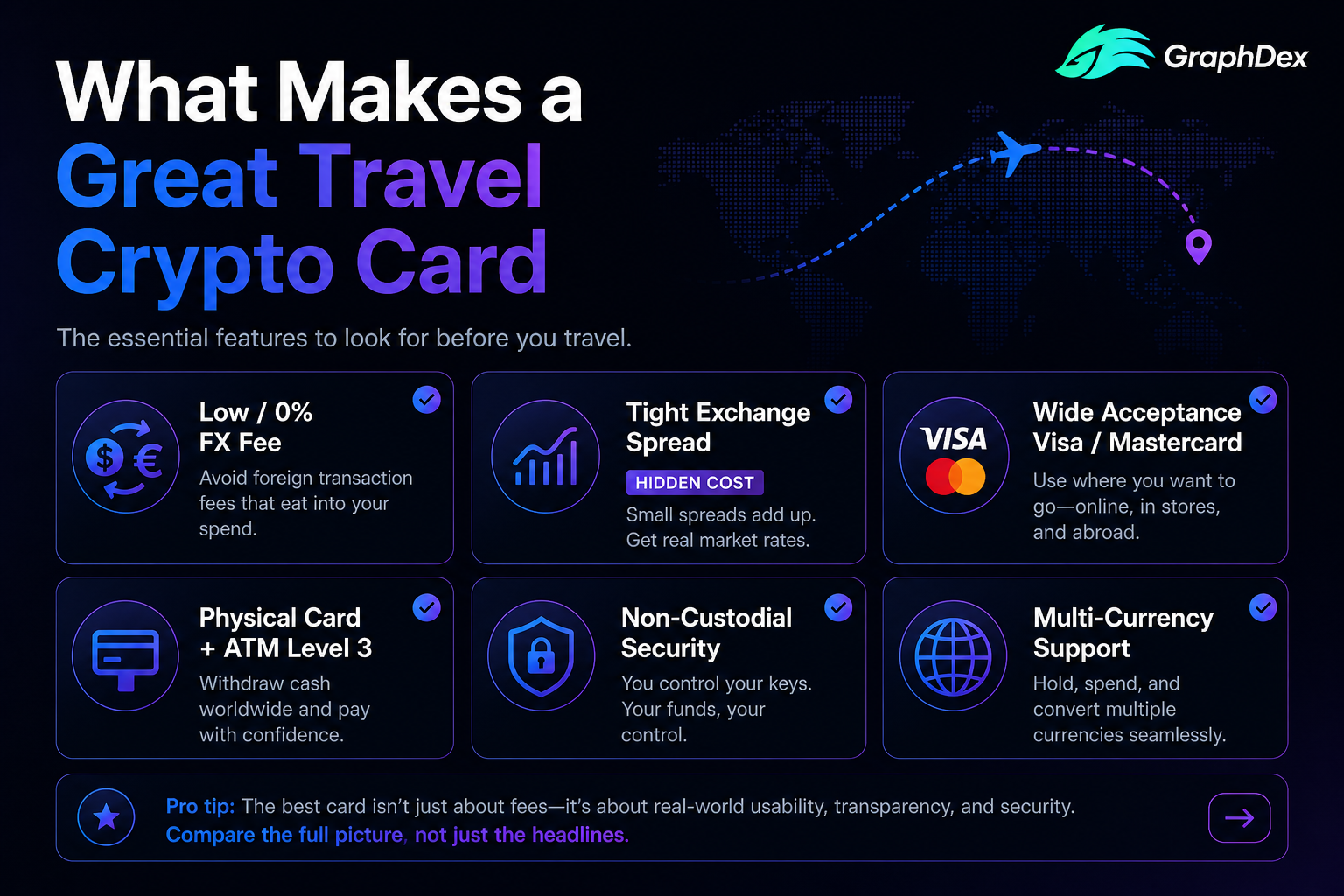
What Makes a Great Travel Crypto Card
The features that matter most when spending abroad.
Low or Zero Foreign Transaction Fees
The headline feature. Traditional cards charge 2-4% on foreign purchases; the best crypto cards charge 0%. This alone can save significant money on a trip.
Tight Exchange-Rate Spread
The hidden factor. When your crypto converts to local currency, the exchange rate matters. A tight spread (close to market rate) means you get fair value; a wide spread quietly costs you. Check the actual conversion rate — "0% FX" with a 2% spread is worse than "0.5% FX" with a tight spread.
Wide Global Acceptance
You need a card accepted where you're traveling. Visa and Mastercard offer the widest global merchant coverage — tens of millions of merchants worldwide. This is essential for travel.
Physical Card + ATM Access
For travel, a physical card (KYC Level 3) is important — many places abroad still require physical cards, and ATM access for local cash is valuable. Mobile pay (virtual card) helps but isn't universally accepted abroad.
Security & Control
Traveling adds risk (loss, theft, fraud). Look for:
- Non-custodial: Funds stay in your wallet, not exposed if the card is compromised
- Freeze/unfreeze controls: Instantly freeze a lost card
- Spending limits: Control exposure
- Virtual card backup: If your physical card is lost, a virtual card keeps you spending
Multi-Currency Handling
The best travel cards handle multiple currencies smoothly, converting at the point of sale without extra friction or fees.
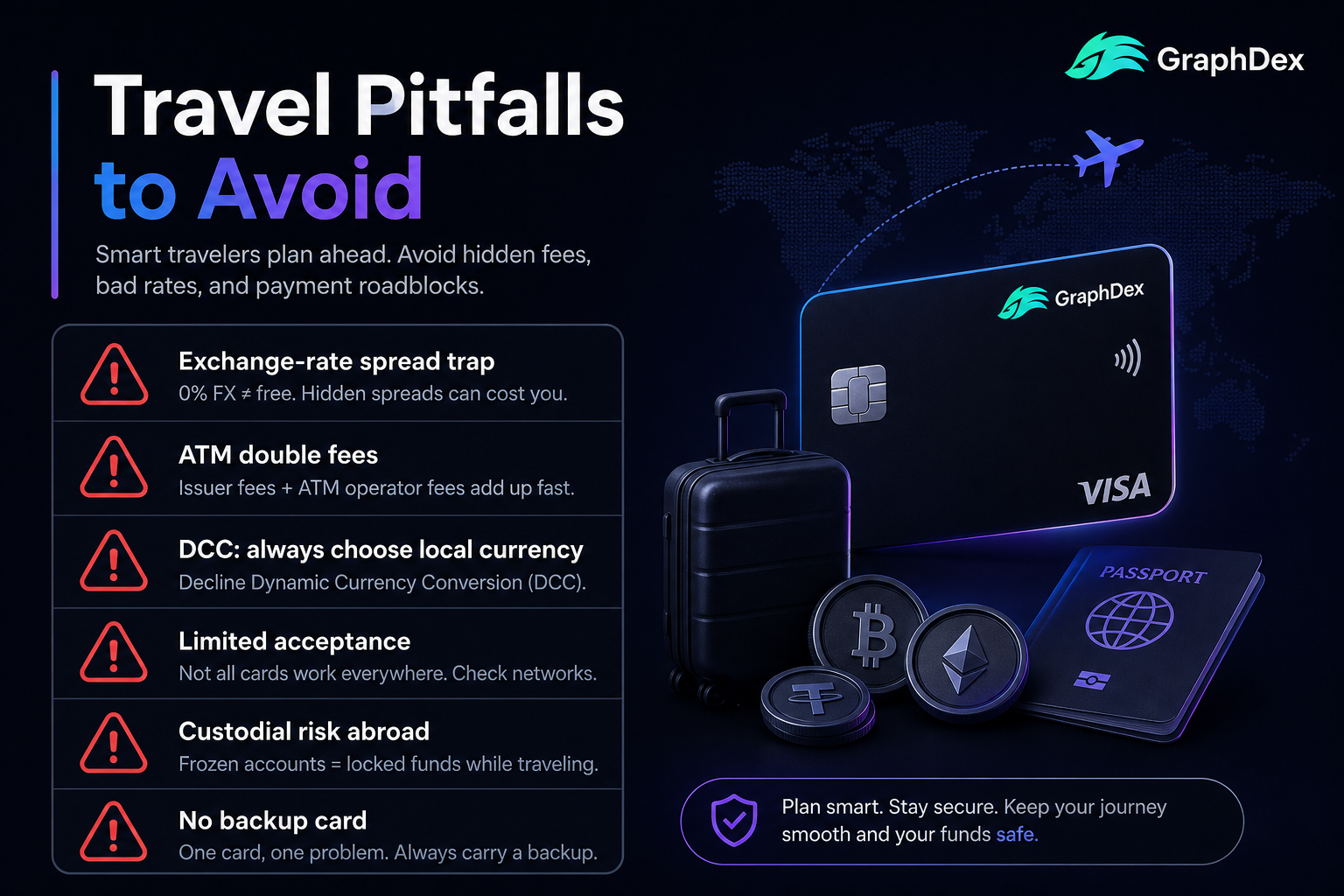
What to Watch Out For
Common travel crypto card pitfalls.
The exchange-rate spread trap. As emphasized, "0% FX fee" doesn't mean free. A wide conversion spread can cost more than a modest fee. Always check the actual rate against market.
ATM fees. Even with a great card, ATM operators abroad charge their own fees. Factor these in for cash withdrawals, and check your card's own ATM fee structure.
Dynamic currency conversion (DCC). When a foreign merchant or ATM offers to charge you in your "home currency," decline — always choose the local currency. DCC applies terrible exchange rates. This applies to crypto cards too.
Limited acceptance. Some crypto cards have regional restrictions or narrower acceptance. Verify your card works where you're traveling before relying on it.
KYC for physical cards. Physical cards (best for travel) require full KYC (Level 3). Complete this before your trip — don't wait until you're abroad.
Custodial risk while traveling. If your card is custodial and the provider has issues while you're abroad, your funds could be inaccessible when you need them. Non-custodial cards keep funds in your wallet.
Not having a backup. Relying on a single card abroad is risky. Have a backup payment method (a virtual card, a second card, or some cash).
How to Choose a Travel Crypto Card
Match the card to your travel needs:
Prioritize low total cost (fee + spread) if you:
- Spend significant amounts abroad
- Want to minimize the cost of every transaction
- Travel frequently
Prioritize a physical card + ATM access if you:
- Travel to places where mobile pay isn't universal
- Need local cash
- Want reliable in-person acceptance
Prioritize non-custodial security if you:
- Want your funds protected if the card is compromised
- Value keeping control of your assets while traveling
- Prefer not to trust a custodian with your travel funds
Prioritize wide acceptance if you:
- Travel to diverse destinations
- Need a card that works everywhere (Visa/Mastercard)
The practical checklist before traveling:
- Complete KYC Level 3 for a physical card before your trip
- Verify low FX fees AND a tight exchange-rate spread
- Confirm the card works in your destination
- Set up a backup (virtual card or second method)
- Know how to freeze the card if lost
- Understand ATM fees and limits
Get a travel-ready GraphPay card
How GraphPay Works for Travel
GraphPay's non-custodial, multi-chain card is built for the features travelers need.
For travel, GraphPay offers:
- Non-custodial security: Your crypto stays in your own wallet while you travel — if your card is lost or compromised, your funds remain in your control, not exposed in a custodian's account
- Visa & Mastercard: Global acceptance at tens of millions of merchants worldwide
- Physical card (Level 3): For in-store tap-to-pay and ATM access abroad
- Virtual card backup (Level 1+): If your physical card is lost, a virtual card keeps you spending via mobile pay
- Multi-chain funding: Load from BNB Chain, Ethereum, or TRON with USDT/USDC
- Tiered KYC: Complete Level 3 before your trip for full physical-card capability
The travel advantage: GraphPay's non-custodial model is particularly valuable for travel — your funds stay in your wallet, so a lost or stolen card doesn't mean lost funds (the card can be frozen, and your crypto was never in the card itself). Combined with global Visa/Mastercard acceptance and both virtual and physical cards, GraphPay covers the core travel needs.
Before you travel: Complete KYC Level 3 for a physical card, verify your destinations' acceptance, and set up a virtual card as backup. Then spend abroad with your funds staying in your wallet.
Get a GraphPay card before your next trip
Related Guides
- Virtual vs Physical Crypto Cards in 2026: Which Should You Get?
- Crypto Card vs Bank Card in 2026: Which Is Better for You?
- How to Get a Crypto Card in 2026: Step-by-Step Guide by KYC Level
Frequently Asked Questions
Are crypto cards good for travel? They can be excellent — many crypto cards eliminate the 2-4% foreign transaction fees that traditional bank cards charge, and offer near-market exchange rates. They work globally on Visa/Mastercard rails. However, watch the hidden exchange-rate spread ("0% FX" with a wide spread can still cost you), and get a physical card (KYC Level 3) for in-store and ATM access abroad.
Do crypto cards charge foreign transaction fees? The best ones don't — many crypto cards offer 0% foreign transaction fees, versus 2-4% on typical bank cards. However, "0% FX" isn't the whole story: the exchange-rate spread (when converting crypto to local currency) is a hidden cost. Always check the actual conversion rate against market. Total cost (fee + spread) is what matters for travel.
What's the best crypto card for international travel? Look for: low/zero FX fees, a tight exchange-rate spread, wide acceptance (Visa/Mastercard), a physical card with ATM access (KYC Level 3), and non-custodial security (funds in your wallet). GraphPay offers non-custodial architecture, Visa & Mastercard acceptance, and both virtual and physical cards. Other options (Bleap, Gnosis Pay) offer 0% FX with region-specific strengths.
Can I withdraw cash abroad with a crypto card? Yes, with a physical card (KYC Level 3) that supports ATM withdrawals. Note two fee layers: your card's ATM fee and the ATM operator's fee (charged by the machine abroad). Also decline "dynamic currency conversion" (charging in your home currency) — always choose local currency for better rates. Factor ATM fees into your cash strategy.
Is it safe to use a crypto card while traveling? It can be safe with the right card. Non-custodial cards (like GraphPay) keep your funds in your wallet — if the card is lost or compromised, your crypto isn't exposed (it was never in the card). Look for freeze/unfreeze controls, spending limits, and a virtual card backup. Avoid custodial cards where a provider issue could lock your funds while abroad.
Should I get a physical or virtual crypto card for travel? Ideally both. A physical card (KYC Level 3) is important for travel — many places abroad require physical cards, and ATM access needs one. A virtual card serves as a backup (via mobile pay) if your physical card is lost. The combination gives you reliable in-person spending plus a fallback. Complete KYC Level 3 before traveling for the physical card.
How do I avoid hidden fees on crypto cards abroad? Four steps: (1) Check both the FX fee AND the exchange-rate spread — "0% FX" with a wide spread still costs you; (2) Always choose local currency, never "home currency" (decline dynamic currency conversion); (3) Understand ATM fees (your card's + the operator's); (4) Compare total cost for your spending. Transparent, non-custodial cards make hidden costs easier to spot.
About This Guide
This guide is published by the GraphPay Research team — building non-custodial crypto payment infrastructure. Our content is based on current card industry practices, fee structures, and 2026 market data.
Sources & data: Fee ranges, features, and card details reflect publicly available information as of 2026 and may change. Specific fees, spreads, and availability vary by provider and jurisdiction. This guide is educational and not financial advice — always verify current terms and fees with your provider before traveling.
GraphPay is non-custodial crypto payment infrastructure — your crypto, your pay. Learn more at graphpay.io.
Last reviewed: May 2026 · GraphPay Research